
The word playing can describe many activities, including taking part in a game, performing music, acting in a role, practicing a sport, or joking with friends. The best synonym depends on what someone is doing and what they want to express. For example, competing works for sports, performing fits music and theater, and having fun describes an enjoyable activity.
Finding the right alternative can make your writing clearer and more interesting. Students may need different words for essays, writers may want to avoid repetition, and professionals may need precise language for reports or presentations. This guide explores useful alternatives, explains their differences, and provides examples to help you choose the right expression for each situation.
Quick Answer
Useful synonyms for playing include participating, engaging, competing, performing, practicing, entertaining, gaming, acting, recreating, and having fun. The best choice depends on the context. Use competing for contests, performing for music or theater, practicing for skill development, and participating for general involvement in an activity.
Quick List: Useful Alternatives to Playing
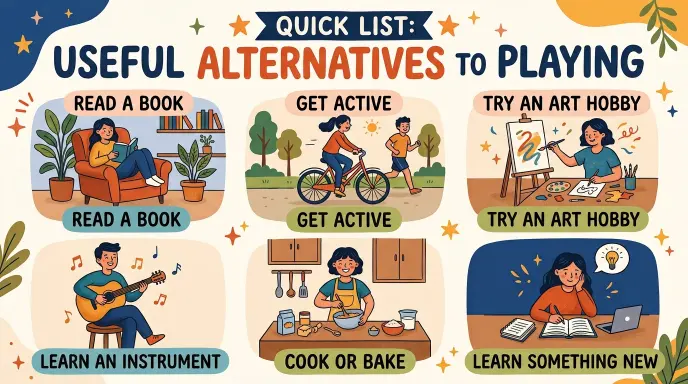
Here are 35 alternatives grouped by context so you can find the right word quickly.
Closest alternatives
- Participating
- Engaging
- Taking part
- Involving oneself
- Joining in
Sports and games
- Competing
- Gaming
- Practicing
- Scrimmaging
- Battling
- Contesting
- Playing a match
Music and performance
- Performing
- Playing an instrument
- Rehearsing
- Presenting
- Entertaining
- Acting
Fun and recreation
- Having fun
- Enjoying oneself
- Amusing oneself
- Fooling around
- Messing around
- Socializing
- Exploring
Specific activities
- Role-playing
- Simulating
- Experimenting
- Toying with
- Operating
- Manipulating
- Exercising
- Training
- Competing for enjoyment
Not every expression is interchangeable with playing. For example, training focuses on preparation, while performing usually involves presenting a skill or piece of work to others.
Formal Alternatives to Playing
Formal writing benefits from precise language. Rather than replacing playing with the same word every time, choose an alternative that explains the activity more clearly.
1. Participating
Meaning: Taking part in an activity or event.
Explanation: This is a useful alternative when someone joins an organized activity. It does not necessarily mean playing a game.
Example: Students are participating in an interschool basketball tournament.
Best Use: Academic writing, event reports, school announcements, and professional communication.
Worst Use: Avoid it when describing the physical action of playing a musical instrument.
Tone: Formal and neutral.
2. Engaging in
Meaning: Taking part in an activity or becoming involved in it.
Explanation: This phrase works well when the activity itself matters more than the idea of a game.
Example: Children benefit from engaging in creative outdoor activities.
Best Use: Educational reports, research discussions, and professional documents.
Worst Use: It may sound unnecessarily formal in casual conversation.
Tone: Professional and explanatory.
3. Competing
Meaning: Trying to win against another person or team.
Explanation: This is appropriate when playing involves a contest or a competitive goal.
Example: Our school team is competing in the regional championship.
Best Use: Sports reports, tournament announcements, and athletic profiles.
Worst Use: Do not use it for relaxed play when nobody is trying to win.
Tone: Active and competitive.
4. Performing
Meaning: Carrying out an artistic or skilled activity for an audience or as part of a presentation.
Explanation: It is especially useful for music, theater, dance, and other public presentations.
Example: She is performing a piano piece at the school concert.
Best Use: Music reviews, event programs, and performance reports.
Worst Use: It does not accurately describe every casual practice session.
Tone: Professional and artistic.
5. Rehearsing
Meaning: Practicing a performance before presenting it.
Explanation: Rehearsing is a specific type of preparation. It is not a general synonym for playing.
Example: The musicians are rehearsing for Friday’s concert.
Best Use: Theater, music, dance, and event planning.
Worst Use: Avoid it when describing a finished performance or a recreational game.
Tone: Organized and purposeful.
6. Practicing
Meaning: Repeating an activity to improve a skill.
Explanation: This works when someone is developing an ability through repetition.
Example: He is practicing the guitar for thirty minutes every evening.
Best Use: Education, sports training, music lessons, and personal development.
Worst Use: It may change the meaning if the original activity is purely recreational.
Tone: Neutral and purposeful.
7. Executing
Meaning: Carrying out a planned action or technique.
Explanation: This term focuses on how an action is performed, rather than on play in general.
Example: The player is executing a difficult move during the match.
Best Use: Technical sports analysis, strategy discussions, and professional reports.
Worst Use: Avoid it when describing children casually playing in a park.
Tone: Technical and precise.
8. Conducting
Meaning: Organizing, directing, or carrying out an activity.
Explanation: It can replace playing when the intended meaning is managing a simulation, exercise, or structured activity. It does not normally mean taking part in a game.
Example: The instructor is conducting a role-playing exercise.
Best Use: Training sessions, workshops, and educational activities.
Worst Use: It is not a natural substitute for playing soccer or a piano.
Tone: Formal and organized.
9. Operating
Meaning: Controlling or using a machine, system, or device.
Explanation: This can apply when playing refers to interacting with a machine or equipment, although it changes the focus from entertainment to control.
Example: The technician is operating the flight simulator.
Best Use: Technical documents, equipment instructions, and simulations.
Worst Use: Avoid it when the entertainment aspect is more important than the equipment.
Tone: Technical and professional.
10. Simulating
Meaning: Recreating a real situation through a model or exercise.
Explanation: This term works for simulated games, training exercises, and role-based activities that imitate real events.
Example: The students are simulating a courtroom discussion.
Best Use: Education, professional training, and research.
Worst Use: It is inaccurate for ordinary play that does not imitate another situation.
Tone: Formal and analytical.
Semi-Formal and Neutral Alternatives
These words and phrases are useful in everyday writing, school assignments, websites, and workplace communication.
1. Taking Part
Meaning: Joining an activity.
Explanation: A natural phrase that emphasizes involvement rather than competition.
Example: Everyone is taking part in the school sports day.
Best Use: Everyday writing, school notices, and event summaries.
Worst Use: It may be too broad when you need to name a specific action.
Tone: Neutral and friendly.
2. Joining In
Meaning: Becoming involved in an activity that is already happening.
Explanation: This emphasizes entering an ongoing activity.
Example: My younger brother joined in the board game.
Best Use: Informal reports, conversations, and family stories.
Worst Use: It is less suitable for formal research writing.
Tone: Friendly and conversational.
3. Having Fun
Meaning: Enjoying an activity.
Explanation: This describes the experience of enjoyment, not necessarily the action of playing.
Example: The children are having fun at the playground.
Best Use: Family blogs, children’s content, and casual writing.
Worst Use: Avoid it when you need to explain the exact activity.
Tone: Warm and positive.
4. Enjoying Oneself
Meaning: Experiencing pleasure or enjoyment.
Explanation: It focuses on how someone feels rather than what they are doing.
Example: The students enjoyed themselves during the outdoor games.
Best Use: Narratives, school reports, and polite conversation.
Worst Use: It may sound unnatural in short, casual messages.
Tone: Polite and neutral.
5. Gaming
Meaning: Taking part in video games or other games.
Explanation: It is especially common for digital gaming, although its meaning can vary by context.
Example: My friends are gaming online tonight.
Best Use: Gaming websites, technology articles, and casual conversation.
Worst Use: It is not an accurate replacement for playing a physical sport or performing music.
Tone: Modern and casual.
6. Acting
Meaning: Portraying a character in a performance.
Explanation: This alternative fits dramatic or theatrical play, but it does not describe all types of playing.
Example: She is acting in the school production of a classic play.
Best Use: Theater, film, drama classes, and storytelling.
Worst Use: Avoid it when describing an ordinary game without role-playing.
Tone: Neutral and artistic.
7. Role-Playing
Meaning: Taking on a character or role in an imagined situation.
Explanation: Role-playing is a specific kind of play used in games, education, and training.
Example: The class is role-playing a conversation between a customer and a shopkeeper.
Best Use: Language lessons, workshops, tabletop games, and training.
Worst Use: It is too specific for general recreational activities.
Tone: Educational and imaginative.
8. Exploring
Meaning: Investigating or discovering something.
Explanation: It can describe play when children discover their surroundings or experiment with new materials.
Example: The toddlers are exploring the toys in the activity room.
Best Use: Early education, travel writing, and creative activities.
Worst Use: It is not a direct substitute when someone is following a set game.
Tone: Curious and descriptive.
9. Experimenting
Meaning: Trying different methods or ideas to discover what happens.
Explanation: This is appropriate when playing involves testing possibilities or creating something new.
Example: The children are experimenting with different building designs.
Best Use: Science education, creative projects, and problem-solving.
Worst Use: Avoid it when the activity has no experimental purpose.
Tone: Curious and practical.
10. Entertaining
Meaning: Providing enjoyment to other people.
Explanation: It applies when playing music, performing tricks, or doing something to amuse an audience.
Example: The band is entertaining guests at the community event.
Best Use: Event descriptions, performance reviews, and hospitality writing.
Worst Use: It changes the meaning if the person is playing privately for personal enjoyment.
Tone: Positive and professional.
Informal and Casual Alternatives

Casual expressions are useful in texts, conversations, social media posts, and personal stories.
1. Fooling Around
Meaning: Acting playfully without a serious purpose.
Example: The kids were fooling around in the backyard.
When It Sounds Natural: Friendly conversations about silly or playful behavior.
When to Avoid It: Formal reports or situations where the activity requires concentration.
Tone: Casual and playful.
2. Messing Around
Meaning: Doing something casually, often without a clear plan.
Example: We were messing around with a new video game.
When It Sounds Natural: Talking about relaxed experimentation or unstructured fun.
When to Avoid It: Professional updates where you need to show focused effort.
Tone: Informal and relaxed.
3. Hanging Out
Meaning: Spending time socially with other people.
Example: We were hanging out at the park after school.
When It Sounds Natural: Describing time spent with friends, sometimes including games.
When to Avoid It: When you need to identify a specific activity, such as playing basketball.
Tone: Very casual and social.
4. Toying With
Meaning: Handling or considering something lightly, often without serious commitment.
Example: He was toying with the idea of joining the chess club.
When It Sounds Natural: Describing tentative ideas or light manipulation of an object.
When to Avoid It: As a general substitute for enjoyable play; it can suggest indecision or manipulation.
Tone: Casual, sometimes negative.
5. Kicking Around
Meaning: Informally discussing an idea or casually spending time with an object or activity, depending on context.
Example: We were kicking around a few ideas for our next game night.
When It Sounds Natural: Informal discussions and brainstorming.
When to Avoid It: Formal documents or descriptions of specific sports actions unless the context supports the phrase.
Tone: Relaxed and conversational.
6. Chilling
Meaning: Relaxing without much effort.
Example: We were chilling at home and playing cards.
When It Sounds Natural: Text messages and conversations among friends.
When to Avoid It: Academic writing or formal communication.
Tone: Very informal.
True Synonyms vs. Contextual Alternatives
The word playing has several meanings, so not every alternative can replace it in every sentence.
| Type | What It Means | Can It Replace the Original? |
|---|---|---|
| True synonym | A word with nearly the same meaning in a particular context | Yes, when the context matches |
| Near synonym | A word with a similar but slightly different meaning | Sometimes |
| Contextual alternative | A phrase that fits a specific situation | Yes, in that situation |
| Broader expression | A phrase that covers a wider range of activities | Sometimes, but detail may be lost |
| Narrower expression | A phrase describing one particular kind of play | Only when that specific activity is intended |
For example, taking part can replace playing in “She is playing in the school tournament” if the focus is participation. However, performing is more appropriate when someone plays a musical instrument before an audience.
Similarly, having fun describes enjoyment rather than the activity itself. A person may be having fun while playing, studying, or traveling.
Industry-Specific Usage
Business Writing
In business writing, precision is more useful than variety for its own sake.
- Instead of “The team is playing with a new idea,” write “The team is experimenting with a new idea.”
- Instead of “Employees are playing a role in the project,” write “Employees are contributing to the project” if you mean active involvement.
- Instead of “We are playing around with the design,” write “We are testing several design options.”
Remember that playing a role means having an effect or function. It does not mean participating in a game.
Corporate Communication
Reports and announcements should make the purpose of an activity clear.
- “The staff are participating in a team-building exercise.”
- “The department is conducting a training simulation.”
- “The project team is testing a new workflow.”
Use participating for involvement, conducting for organizing an activity, and testing for checking how well something works.
Academic Writing
Students should choose words that accurately describe the activity.
- “The children are playing with blocks” can become “The children are exploring building materials” when discovery is the focus.
- “The participants are playing different roles” can become “The participants are assuming different roles.”
- “The students are playing a learning game” can become “The students are participating in a game-based learning activity.”
Avoid replacing playing with a complicated term if the simpler word is already accurate.
Customer Service
Customer service communication rarely needs an alternative to playing unless the conversation concerns a game, device, or interactive service.
For example:
- “Please try restarting the game.”
- “You can test the feature in demo mode.”
- “The application supports interactive practice sessions.”
Clear instructions are more helpful than unnecessarily formal wording.
Legal Writing
Legal documents require particular care because the exact wording can affect how an activity or responsibility is understood.
For instance, playing a role, participating in an event, and operating equipment describe different actions. They should not be substituted for one another without checking the intended meaning.
If a contract, policy, or legal statement refers to a particular activity, retain the defined term unless a qualified reviewer confirms that another expression preserves its meaning.
Email Communication
Choose an alternative that explains what the recipient needs to know.
- Client update: “We are testing two versions of the interface.”
- Project request: “Please participate in the product demonstration.”
- Internal update: “The team is rehearsing its presentation.”
- School email: “Students will take part in a group activity.”
- Event planning: “The musicians will perform during the opening ceremony.”
Short Dialogue Examples
1. Workplace
Person A: What is the team doing with the new design?
Person B: We are testing a few options before choosing one.
2. Classroom
Person A: What are the students doing outside?
Person B: They are participating in a group activity.
3. Customer Service
Person A: How can I check this feature?
Person B: You can test it in demo mode first.
4. Casual Conversation
Person A: What did you do yesterday?
Person B: I hung out with my friends and played board games.
5. Music Practice
Person A: Is the band ready for the concert?
Person B: Almost. We are rehearsing the final song today.
How to Replace “Playing” in a Sentence
The right replacement depends on the activity and the intended meaning.
Example 1: Playing Basketball
Original: The students are playing basketball.
Alternative: The students are competing in a basketball game.
Why it works: Competing emphasizes the contest. It is less suitable if the students are only practicing casually.
Example 2: Playing the Guitar
Original: She is playing the guitar.
Alternative: She is performing a guitar piece.
Why it works: The alternative suggests a planned musical performance, often for an audience.
Example 3: Playing Outside
Original: The children are playing outside.
Alternative: The children are enjoying outdoor activities.
Why it works: This sounds more descriptive but is broader. It does not identify the exact game.
Example 4: Playing a Video Game
Original: He is playing a video game.
Alternative: He is gaming.
Why it works: Gaming is concise and natural when the context involves video games.
Example 5: Playing a Role
Original: She is playing an important role in the project.
Alternative: She is making an important contribution to the project.
Why it works: Making a contribution emphasizes the value of her work rather than her assigned role.
Example 6: Playing With Ideas
Original: We are playing with a few ideas.
Alternative: We are exploring a few ideas.
Why it works: Exploring sounds more purposeful and fits professional or academic discussions.
Example 7: Playing Before a Concert
Original: The musicians are playing before the concert.
Alternative: The musicians are rehearsing before the concert.
Why it works: This works if they are practicing the music in preparation for the event. It would not fit if they were already giving a performance.
Example 8: Playing With Toys
Original: The toddler is playing with building blocks.
Alternative: The toddler is experimenting with building blocks.
Why it works: This highlights discovery and experimentation, not just general play.
Example 9: Playing a Match
Original: Our team is playing a match this weekend.
Alternative: Our team is competing this weekend.
Why it works: The alternative emphasizes the competitive event but does not specify the sport or opponent.
Example 10: Playing Around at Work
Original: The employees are playing around with the software.
Alternative: The employees are testing the software.
Why it works: Testing sounds purposeful and professional. Use it only if they are actually checking the software rather than casually exploring it.
Comparison Table: Choosing the Right Alternative
| Phrase | Tone | Meaning or Scope | Best Use | Example |
|---|---|---|---|---|
| Participating | Neutral | Taking part | Events and school activities | She is participating in the tournament. |
| Engaging in | Formal | Becoming involved | Reports and essays | They are engaging in group activities. |
| Competing | Active | Trying to win | Sports and contests | We are competing for the title. |
| Performing | Professional | Presenting an artistic skill | Music and theater | He is performing a solo. |
| Practicing | Neutral | Improving a skill | Learning and training | She is practicing the piano. |
| Rehearsing | Professional | Preparing a performance | Music and theater | They are rehearsing the scene. |
| Gaming | Casual | Playing games, especially digital ones | Gaming discussions | He is gaming with friends. |
| Role-playing | Neutral | Acting out a role | Training and games | They are role-playing a customer call. |
| Exploring | Descriptive | Discovering or investigating | Learning and creativity | The children are exploring new materials. |
| Experimenting | Neutral | Testing possibilities | Design and science | We are experimenting with new methods. |
| Having fun | Casual | Enjoying oneself | Everyday conversation | The kids are having fun. |
| Fooling around | Informal | Acting playfully | Casual conversation | They are fooling around outside. |
Which Alternative Should You Choose?
Use this quick guide to select a suitable expression.
- Formal writing: Choose participating, engaging in, or conducting, depending on the action.
- Business communication: Use testing, exploring, or contributing when these words describe the actual work.
- Academic writing: Prefer precise phrases such as participating in an activity or engaging in recreational play.
- Legal writing: Preserve the original defined term unless a suitable alternative has been verified.
- Professional email: Choose direct wording such as participate, practice, test, or perform.
- Everyday conversation: Use playing, having fun, joining in, or gaming.
- Casual messages: Try hanging out, messing around, or chilling when the context supports them.
The safest choice is usually the simplest expression that accurately describes the action.
Grammar and Usage Guide
1. Understand the Different Meanings
Playing is the -ing form of the verb play. It can refer to games, sports, music, theater, or figurative actions.
Examples:
- The children are playing outside.
- She is playing the piano.
- He is playing a major role in the project.
The meaning changes with the words around it.
2. Use the Correct Verb Form
After am, is, or are, use the -ing form for an ongoing action.
- Correct: She is performing a song.
- Incorrect: She is perform a song.
For a simple present statement about a regular activity, use the base verb with the appropriate subject.
- I play chess every weekend.
- He plays chess every weekend.
3. Pay Attention to Prepositions
Different alternatives use different prepositions.
- Participate in an activity.
- Engage in an activity.
- Compete in a tournament.
- Practice for a performance.
- Rehearse for a concert.
- Play with toys.
Do not automatically keep the preposition from the original sentence when changing the verb.
4. Know the Difference Between “Play” and “Practice”
Play can describe enjoying an activity or performing it. Practice means repeating an activity to improve a skill.
- She plays the piano for fun.
- She practices the piano before her examination.
Both sentences can describe the same person, but the purpose differs.
5. Understand “Play a Role”
The expression play a role is figurative. It means having a function or influence.
Example: Communication plays an important role in teamwork.
Possible alternatives include:
- Contribute to teamwork.
- Influence teamwork.
- Help support teamwork.
The best alternative depends on the sentence.
6. Capitalization and Punctuation
Capitalize playing only when it begins a sentence or appears in a title according to the chosen style.
- Playing outdoors can be enjoyable.
- The children are playing outside.
When using an alternative in a sentence, retain the normal punctuation. The replacement does not require special quotation marks or capitalization.
7. Singular and Plural Subjects
The verb form must agree with the subject.
- The child is playing.
- The children are playing.
- The team is competing.
- The players are competing.
In American English, collective nouns such as team are generally treated as singular when the group acts as one unit.
Common Mistakes to Avoid
1. Treating Every Alternative as an Exact Synonym
Competing implies an attempt to win, while playing does not always involve competition. Choose words that preserve the intended meaning.
2. Using Formal Language in Casual Situations
Saying “We are engaging in recreational activities” to friends may sound stiff. “We’re playing outside” is more natural.
3. Confusing Practice With Performance
Rehearsing or practicing happens before or during skill development. Performing generally means presenting the skill or work.
4. Replacing “Playing a Role” Incorrectly
Playing a role can mean having an important function. Replacing it with gaming would change the meaning entirely.
5. Using Vague Alternatives
Doing an activity may be grammatically correct, but it often provides less information than playing chess or practicing basketball.
6. Ignoring Grammar and Prepositions
Write “participating in the event,” not “participating at the event” when you mean taking part in it.
7. Repeating the Same Alternative Too Often
Repeatedly using participating can make writing monotonous. Vary your wording only when another expression is accurate.
8. Choosing Slang for Professional Writing
Expressions such as chilling and messing around may not suit formal reports, workplace emails, or academic assignments.
When Not to Use the Original Word
Although many alternatives are available, playing is often the clearest choice.
Consider replacing it in these situations:
- When the purpose is specific: Use practicing if someone is developing a skill.
- When competition matters: Use competing if the person is trying to win.
- When an audience is involved: Use performing for a musical or theatrical presentation.
- When professional clarity matters: Replace “playing with the software” with “testing the software” if testing is the actual task.
- When the phrase is repetitive: Use a suitable alternative if playing appears too often in the same paragraph.
- When the action is figurative: Replace playing a role with contributing to or influencing when that better expresses the intended meaning.
However, keep playing when it is accurate and natural. There is no need to replace a clear word merely to make writing appear sophisticated.
Advanced Writer Tips
Tone Control
For formal writing, consider participating, engaging in, or performing. neutral writing, taking part and practicing often work well. For casual conversations, having fun and hanging out may be more natural.
Professional Email Etiquette
Use words that identify the action directly. “We are testing the new feature” communicates more than “We are playing around with the feature” when the task involves evaluation.
Politeness
Politeness often comes from the sentence rather than the synonym.
- Direct: “Participate in the meeting.”
- Polite: “Please participate in the meeting if your schedule allows.”
The second version sounds more considerate because it recognizes the recipient’s circumstances.
Context Alignment
Think about your audience before choosing a replacement. Children may understand playing a game more easily than participating in a recreational activity. A formal report may benefit from the more precise phrase.
Precision
Ask yourself what the person is actually doing. Are they competing, practicing, performing, exploring, or simply enjoying themselves? The answer usually reveals the best word.
Readability
Do not replace a short, familiar word with a long phrase unless it adds meaning.
For example, “The children are playing outside” is clearer than “The children are participating in an outdoor recreational experience.”
Related Questions
What Is Another Way to Say Playing?
Common alternatives include taking part, participating, engaging, competing, practicing, and having fun. Choose one based on whether the activity involves a game, a performance, training, or simple enjoyment.
What Is a Professional Alternative to Playing?
Participating, testing, practicing, and performing can work in professional communication. The best choice depends on the activity. For example, use testing when evaluating software and participating when joining a meeting or exercise.
What Is a Formal Word for Playing?
Participating and engaging in are useful formal alternatives when describing involvement in an activity. Performing and competing are more precise for music and contests, respectively.
Can I Use Participating Instead of Playing?
Yes, when the focus is on taking part in an activity. However, participating does not always describe the physical action. “Participating in a chess tournament” emphasizes involvement, while “playing chess” names the activity itself.
Is Playing a Formal or Informal Word?
Playing is a neutral, everyday word. It is suitable for conversation, schoolwork, and many professional contexts. More specific alternatives may be better when the purpose is to describe competition, preparation, or performance.
What Is the Difference Between Playing and Gaming?
Playing can describe games, sports, musical instruments, and other activities. Gaming usually refers to playing video games or participating in gaming activities, though it can have broader meanings in some contexts.
What Is the Difference Between Playing and Performing?
Playing can refer to practicing or casually using an instrument. Performing usually emphasizes presenting a skill or work to an audience. A musician can play privately without giving a performance.
FAQs
1. What Are the Best Synonyms for Playing?
The best alternatives include participating, engaging, competing, performing, practicing, and gaming. Each serves a different purpose, so choose the word that describes the activity most accurately.
2. What Is a Better Word for Playing in an Essay?
Use participating for taking part in an activity, engaging in for involvement, or practicing for skill development. Keep playing if it communicates the meaning most clearly.
3. What Is Another Word for Playing Games?
Depending on the context, you can use gaming, competing, taking part, or participating in a game. Use competing only when winning or beating an opponent is part of the activity.
4. What Is Another Word for Playing Music?
Possible alternatives include performing, practicing, and rehearsing. Use performing for presenting music, practicing for improving technique, and rehearsing for preparing for a performance.
5. What Is a Synonym for Playing Around?
Common casual alternatives include fooling around and messing around. If the activity involves purposeful testing, experimenting or trying out may be more accurate.
6. Can “Engaging In” Replace “Playing”?
Sometimes. “Engaging in recreational activities” is suitable for formal writing, but “engaging in the piano” is incorrect. You could say “playing the piano” or “practicing the piano,” depending on the meaning.
7. How Can I Avoid Repeating the Word Playing?
Identify the activity first, then use a more precise verb where appropriate. You might use competing for a tournament, practicing for skill development, and performing for a concert. Do not change the word if doing so would alter the meaning.
Key Takeaways
- Choose by context: Use competing for contests, performing for artistic presentations, and practicing for skill development.
- Understand the difference: Playing can describe many activities, while its alternatives often have narrower meanings.
- Match the tone: Use participating in formal writing and expressions such as having fun in casual conversation.
- Keep grammar correct: Pay attention to verb forms and prepositions when replacing the original word.
- Prioritize clarity: A simple, accurate word is better than a complicated alternative that changes the meaning.
Conclusion
Finding the right synonym for playing depends on the action, the audience, and the purpose of your sentence. Words such as participating, engaging, competing, performing, and practicing are useful alternatives, but each communicates something different. Choosing the correct one helps your writing stay clear, natural, and precise.
For formal documents, participating and engaging in can describe involvement in activities. In sports, competing emphasizes the effort to win. For music and theater, performing or rehearsing may be more accurate. In everyday conversation, having fun, gaming, and fooling around can sound more natural when their meanings fit.
Remember that synonyms are not simply interchangeable words. Consider what the person is doing before selecting a replacement. If the original word expresses your meaning clearly, keep it. If another phrase provides more detail or suits your audience better, use that alternative. The goal is not to make every sentence sound different; it is to make every sentence communicate exactly what you intend.
