
The word “jerk” is commonly used to describe someone who behaves rudely, selfishly, or disrespectfully toward others. It is an informal word that can express frustration, disappointment, or anger. However, the best alternative depends on what the person did and how strongly you want to express your opinion.
Finding the right synonym can help you communicate more clearly. You might want a polite word for a workplace email, a formal description for an essay, or a casual expression for a conversation with friends. Words such as rude person, selfish person, bully, fool, and inconsiderate person can work in different situations, but they do not all mean exactly the same thing.
This guide explains the most useful alternatives, their meanings, and how to use them naturally in everyday conversation, professional writing, and academic contexts.
Quick Answer: What Are the Best Synonyms for Jerk?
The best synonyms for jerk include rude person, inconsiderate person, selfish person, obnoxious person, bully, fool, creep, and mean person. For professional writing, use phrases such as unprofessional individual or disrespectful person. For casual conversations, jerk, jerk-off, or idiot may fit, although some alternatives are more offensive than others.
Quick List: Useful Alternatives to Jerk

Choose an alternative based on the person’s behavior and the tone you want.
Closest alternatives
- Rude person
- Inconsiderate person
- Selfish person
- Obnoxious person
- Mean person
- Disrespectful person
- Unpleasant person
- Thoughtless person
Formal and professional alternatives
- Unprofessional individual
- Disrespectful colleague
- Inconsiderate individual
- Difficult person
- Uncooperative person
- Disruptive individual
- Uncivil person
- Person with inappropriate behavior
Neutral alternatives
- Unkind person
- Insensitive person
- Unreasonable person
- Arrogant person
- Unpleasant individual
- Self-centered person
- Ill-mannered person
- Thoughtless individual
Casual alternatives
- Idiot
- Fool
- Brat
- Creep
- Punk
- Pain
- Jackass
- A piece of work
Behavior-specific alternatives
- Bully — someone who intimidates or mistreats others
- Liar — someone who deliberately tells falsehoods
- Cheapskate — someone who is unwilling to spend money
- Show-off — someone who tries to attract attention through their achievements or possessions
- Snob — someone who treats others as inferior
- Manipulator — someone who tries to control others through dishonest or unfair tactics
Remember that these words describe different behaviors. A person who is selfish is not necessarily a bully, and a person who is rude is not always dishonest.
Formal Alternatives to Jerk
In formal communication, it is usually better to describe a person’s conduct than to label the person. These alternatives can help you express criticism without sounding unnecessarily insulting.
1. Disrespectful Individual
Meaning: A person who shows little respect for other people.
Explanation: This is a useful alternative when someone speaks rudely, dismisses others’ opinions, or ignores professional boundaries.
Example: The manager addressed the disrespectful behavior during the meeting.
Best Use: Workplace reports, formal complaints, and professional discussions.
Worst Use: Friendly conversations where the wording might sound overly serious.
Tone: Formal, direct, and critical.
2. Inconsiderate Person
Meaning: Someone who fails to consider other people’s needs or feelings.
Explanation: This phrase is close to jerk when the main problem is thoughtless behavior rather than deliberate cruelty.
Example: Leaving the shared office untidy was inconsiderate of the other employees.
Best Use: Situations involving poor manners, interruptions, or a lack of consideration.
Worst Use: Serious cases of deliberate intimidation, where inconsiderate may understate the behavior.
Tone: Polite but disapproving.
3. Unprofessional Individual
Meaning: Someone whose behavior does not meet expected workplace standards.
Explanation: This phrase focuses on conduct at work rather than the person’s entire character.
Example: His unprofessional comments made the discussion uncomfortable.
Best Use: Employee feedback, business communication, and performance reviews.
Worst Use: Personal disputes unrelated to work.
Tone: Formal and objective.
4. Uncivil Person
Meaning: Someone who behaves without courtesy or politeness.
Explanation: Uncivil emphasizes a lack of basic respect and good manners.
Example: The conversation became difficult because of his uncivil remarks.
Best Use: Formal descriptions of rude speech or hostile interactions.
Worst Use: Everyday conversations where a simpler word such as rude sounds more natural.
Tone: Formal and disapproving.
5. Disruptive Individual
Meaning: Someone whose behavior interrupts activities or prevents others from working effectively.
Explanation: This alternative is appropriate when the person’s actions disturb a meeting, classroom, or workplace.
Example: The supervisor asked the disruptive individual to stop interrupting the presentation.
Best Use: School reports, workplace documentation, and meeting summaries.
Worst Use: A private disagreement that does not affect anyone else.
Tone: Professional and behavior-focused.
6. Uncooperative Person
Meaning: Someone who refuses or fails to work constructively with others.
Explanation: An uncooperative person may seem like a jerk when they repeatedly obstruct shared tasks. However, disagreement alone does not make someone uncooperative.
Example: The project was delayed because one team member remained uncooperative.
Best Use: Teamwork discussions, project reports, and conflict resolution.
Worst Use: Situations where someone has a valid reason to disagree.
Tone: Neutral to critical.
7. Arrogant Individual
Meaning: Someone who behaves as if they are more important or capable than others.
Explanation: This word fits when the problem is excessive pride or a feeling of superiority.
Example: The arrogant individual dismissed every suggestion from the team.
Best Use: Character descriptions, opinion pieces, and discussions about workplace behavior.
Worst Use: Cases involving simple forgetfulness or accidental rudeness.
Tone: Strongly critical.
8. Insensitive Person
Meaning: Someone who fails to recognize or care about another person’s feelings.
Explanation: This phrase is more specific than jerk. It highlights a lack of emotional awareness or concern.
Example: His insensitive remark upset the student.
Best Use: Discussions about hurtful comments, emotional situations, and interpersonal relationships.
Worst Use: Situations where the person is mainly dishonest or intentionally threatening.
Tone: Serious and disapproving.
9. Unreasonable Person
Meaning: Someone whose expectations, demands, or decisions are difficult to justify.
Explanation: This alternative works when someone refuses a fair compromise or insists on unrealistic demands.
Example: The customer became unreasonable when the team explained the policy.
Best Use: Negotiations, customer service, and professional disagreements.
Worst Use: When the person is simply impolite but otherwise reasonable.
Tone: Formal to neutral.
10. Ill-Mannered Person
Meaning: Someone who regularly displays poor manners.
Explanation: This phrase emphasizes etiquette rather than selfishness or cruelty.
Example: The ill-mannered guest interrupted others throughout dinner.
Best Use: Formal descriptions of discourteous behavior.
Worst Use: Modern casual conversation, where rude person is usually simpler.
Tone: Formal and somewhat old-fashioned.
Semi-Formal and Neutral Alternatives
Neutral alternatives help you explain what happened without turning a disagreement into a personal attack.
11. Rude Person
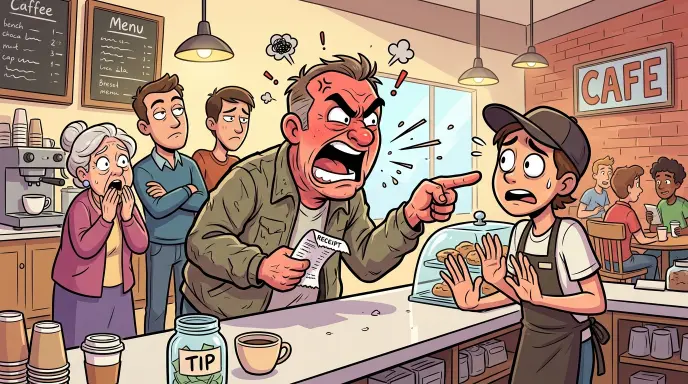
Meaning: Someone who speaks or acts without courtesy.
Explanation: This is one of the closest everyday alternatives to jerk. It is simple, widely understood, and suitable for many situations.
Example: The receptionist was rude when I asked for directions.
Best Use: Everyday conversation, reviews, and straightforward descriptions.
Worst Use: Formal reports that require precise details about conduct.
Tone: Direct and critical.
12. Selfish Person
Meaning: Someone who puts their own needs ahead of others.
Explanation: Use this when a person repeatedly ignores other people’s needs to benefit themselves.
Example: He was selfish to take all the credit for the group’s work.
Best Use: Personal relationships, teamwork discussions, and character descriptions.
Worst Use: A single mistake that does not show a pattern of self-centered behavior.
Tone: Critical.
13. Thoughtless Person
Meaning: Someone who acts without considering the consequences for others.
Explanation: A thoughtless person may cause harm without intending to do so. This makes the word less severe than some alternatives.
Example: It was thoughtless of her to cancel our plans without telling me.
Best Use: Minor disagreements and situations involving carelessness.
Worst Use: Deliberate harassment or intentional cruelty.
Tone: Mildly critical.
14. Mean Person
Meaning: Someone who behaves unkindly toward others.
Explanation: Mean is a broad, everyday word that can describe hurtful comments, unfair treatment, or deliberate unkindness.
Example: It was mean of him to laugh at her mistake.
Best Use: Informal conversations and simple descriptions.
Worst Use: Formal workplace documents where more precise wording is needed.
Tone: Casual and disapproving.
15. Obnoxious Person
Meaning: Someone whose behavior is extremely unpleasant or irritating.
Explanation: This is a strong alternative when someone is loud, offensive, intrusive, or repeatedly annoying.
Example: The obnoxious guest kept shouting over everyone else.
Best Use: Describing persistent irritating behavior.
Worst Use: Minor misunderstandings where the word would exaggerate the problem.
Tone: Strongly negative.
16. Self-Centered Person
Meaning: Someone who focuses mainly on their own interests and experiences.
Explanation: This phrase emphasizes a person’s attention to themselves rather than the effect of a single rude action.
Example: He is so self-centered that he rarely asks how anyone else is doing.
Best Use: Personal discussions and character descriptions.
Worst Use: A situation where someone is merely distracted or busy.
Tone: Critical but less insulting than some slang terms.
17. Unpleasant Person
Meaning: Someone who is difficult or uncomfortable to interact with.
Explanation: This broad phrase can cover rude speech, a hostile attitude, or consistently negative interactions.
Example: The discussion was difficult because he became unpleasant whenever someone disagreed.
Best Use: Polite criticism and general descriptions.
Worst Use: Situations requiring a specific explanation of misconduct.
Tone: Restrained and mildly negative.
18. Unkind Person
Meaning: Someone who does not show kindness or compassion.
Explanation: This phrase works when the main issue is a lack of care or considerate treatment.
Example: It was unkind of her to exclude him from the group deliberately.
Best Use: Personal conversations and discussions about hurtful behavior.
Worst Use: Situations involving only poor manners, without an element of unkindness.
Tone: Gentle but critical.
19. Difficult Person
Meaning: Someone who is hard to work with or communicate with.
Explanation: This is a diplomatic alternative that avoids making a strong judgment about someone’s character.
Example: The team found the client difficult to work with because the requirements changed repeatedly.
Best Use: Workplace communication and conflict discussions.
Worst Use: Serious situations involving threats or deliberate abuse, where the phrase may sound too mild.
Tone: Diplomatic and neutral.
20. Bad Sport
Meaning: Someone who reacts poorly to losing, competition, or another person’s success.
Explanation: This expression is useful when a person’s unpleasant behavior appears during games, contests, or competitive situations.
Example: He was a bad sport after losing the final match.
Best Use: Sports, games, and friendly competitions.
Worst Use: General situations unrelated to competition.
Tone: Informal and mildly critical.
Informal and Casual Alternatives
Casual expressions can sound natural among friends, but some are offensive. Consider your audience before using them.
21. Idiot
Meaning: A person acting foolishly or making a very poor decision.
Example: I felt like an idiot after sending the message to the wrong group.
When It Sounds Natural: Casual conversations, jokes, and moments of frustration.
When to Avoid It: Workplace communication, formal writing, and conversations where it could humiliate someone.
Tone: Insulting, although it can be self-deprecating.
22. Fool
Meaning: Someone who acts unwisely or makes poor decisions.
Example: He was a fool to ignore the warning signs.
When It Sounds Natural: Everyday speech and storytelling.
When to Avoid It: When you want to describe deliberate cruelty rather than poor judgment.
Tone: Mild to moderately critical.
23. Jackass
Meaning: A rude, foolish, or inconsiderate person.
Example: He acted like a jackass when he interrupted the speaker.
When It Sounds Natural: Informal conversations among people comfortable with strong language.
When to Avoid It: Professional settings, polite conversations, and formal documents.
Tone: Vulgar or offensive, depending on the audience.
24. Brat
Meaning: Someone, often a child, who behaves badly or demands too much.
Example: The child acted like a brat when his parents said no.
When It Sounds Natural: Family conversations and discussions about immature behavior.
When to Avoid It: When describing an adult’s serious misconduct, since it may sound childish or dismissive.
Tone: Informal and critical.
25. Creep
Meaning: Someone whose behavior makes others feel uncomfortable, suspicious, or unsafe.
Example: That guy kept following me after I asked him to leave.
When It Sounds Natural: Casual discussions about intrusive or unsettling behavior.
When to Avoid It: When you have no specific reason to suggest that someone behaves in a threatening or disturbing way.
Tone: Strongly negative.
26. Punk
Meaning: An informal insult for someone considered disrespectful, troublesome, or immature.
Example: The punk kept making rude comments during the game.
When It Sounds Natural: Certain informal conversations and fictional dialogue.
When to Avoid It: Professional situations or audiences unfamiliar with the expression.
Tone: Dismissive and sometimes confrontational.
27. Pain
Meaning: A person who causes repeated annoyance or inconvenience.
Example: My little brother can be a real pain when I am studying.
When It Sounds Natural: Friendly complaints and everyday conversation.
When to Avoid It: When you want to describe serious harm or deliberate abuse.
Tone: Mild and conversational.
28. A Piece of Work
Meaning: A person with difficult, surprising, or unpleasant behavior.
Example: He is a real piece of work; he blamed everyone else for his own mistake.
When It Sounds Natural: Informal storytelling and conversations with friends.
When to Avoid It: Formal writing, since the expression is vague and its meaning depends on context.
Tone: Often sarcastic or disapproving.
True Synonyms vs. Contextual Alternatives
Not every alternative to jerk communicates the same thing. The original word usually expresses general disapproval of someone’s behavior, while many alternatives identify a particular trait or action.
| Type | What It Means | Can It Replace “Jerk”? |
|---|---|---|
| True or close synonym | A similarly rude or unpleasant person | Often, depending on context |
| Near synonym | Someone with a related negative trait | Sometimes |
| Contextual alternative | A person who displays a specific behavior | Only when that behavior fits |
| Broader expression | A general description of a difficult person | Yes, but with less detail |
| Narrower expression | Someone who commits a specific type of misconduct | Only in that situation |
For example, rude person is a close alternative when someone behaves disrespectfully. Selfish person is more specific because it focuses on putting personal interests first. Bully describes someone who intimidates or mistreats others, often repeatedly. Liar refers to dishonesty and is not a general synonym for jerk.
Choose the word that describes the actual behavior rather than simply selecting the strongest insult.
Industry-Specific Usage
Business Writing
Business writing benefits from clear descriptions of actions instead of personal insults.
Instead of writing, “The client is a jerk,” consider:
- “The client communicated in a disrespectful manner.”
- “The client made unreasonable demands.”
- “The client repeatedly interrupted team members.”
- “The client’s conduct made collaboration difficult.”
These alternatives explain the problem and help readers understand what needs to change.
Corporate Communication
Internal reports, workplace policies, and performance reviews should focus on observable behavior.
Less effective: The employee is an obnoxious jerk.
More effective: The employee repeatedly interrupted colleagues and made dismissive comments during team meetings.
The second statement identifies specific conduct without relying on a personal label.
Academic Writing
The word jerk is generally too informal for academic essays and research papers. Choose a term that matches the evidence.
For example:
- Disrespectful individual for discourteous behavior.
- Self-interested individual for decisions focused on personal gain.
- Aggressive individual for hostile or forceful behavior, where supported by the facts.
- Unethical behavior for conduct that violates relevant ethical standards.
Avoid diagnosing a person’s character from one incident. Academic writing should explain what happened and support interpretations with evidence.
Customer Service
Customer service messages should remain polite, even when a customer behaves rudely.
Instead of saying, “You are being a jerk,” try:
- “I understand that this situation is frustrating.”
- “Let’s keep the conversation respectful so I can help.”
- “I am happy to discuss the issue, but personal insults are not acceptable.”
- “I can help you review the available options.”
These statements set boundaries without adding unnecessary conflict.
Legal Writing
The word jerk has no precise legal meaning. Legal writing should identify the conduct or issue at hand.
Depending on the facts, relevant terms might include harassment, threatening conduct, discrimination, or breach of policy. These terms have specific meanings that depend on the circumstances and, in some cases, the applicable law.
Do not substitute one of these terms for jerk unless the facts support it. An unpleasant person is not automatically engaging in unlawful conduct.
Email Communication
For professional emails, focus on the action, its effect, and the next step.
Instead of writing, “Your coworker is a jerk,” you could say:
“I’m concerned about the repeated interruptions during our meetings. Could we agree on a process that allows everyone to finish speaking?”
This wording is more constructive because it identifies the problem and suggests a practical solution.
Email Examples Using Professional Alternatives
The following examples demonstrate how to discuss difficult behavior without using personal insults.
Short Dialogue Examples
1. Workplace
Person A: Why was Daniel so rude during the meeting?
Person B: I think he was frustrated, but he should still be respectful.
2. Classroom
Person A: He laughed when I gave the wrong answer.
Person B: That was unkind. Everyone makes mistakes.
3. Customer Service
Person A: The customer keeps interrupting me.
Person B: Stay calm and explain that you want to help, but need a chance to speak.
4. Casual Conversation
Person A: He canceled our plans at the last minute again.
Person B: That’s pretty inconsiderate.
5. Professional Discussion
Person A: I find it difficult to work with this colleague.
B: Which behavior is causing the problem?
Person A: He dismisses suggestions without considering them.
B: Then it may help to address that specific behavior.
How to Replace “Jerk” in a Sentence
The right replacement depends on the reason you are criticizing someone.
Example 1: General Rudeness
Original: He is such a jerk.
Alternative: He is such a rude person.
Why it works: The replacement is clear and slightly more specific about the problem.
Example 2: Selfish Behavior
Original: My friend acted like a jerk when we shared the bill.
Alternative: My friend acted selfishly when we shared the bill.
Why it works: The revised sentence identifies the behavior rather than labeling the person.
Example 3: Workplace Conduct
Original: My boss was a jerk during the meeting.
Alternative: My boss was disrespectful during the meeting.
Why it works: The alternative sounds more professional and focuses on conduct.
Example 4: Thoughtless Actions
Original: It was a jerk move to cancel at the last minute.
Alternative: It was inconsiderate to cancel at the last minute.
Why it works: Inconsiderate describes the effect on others without using an insult.
Example 5: Hurtful Comments
Original: He was a jerk for making that joke.
Alternative: He was insensitive to make that joke.
Why it works: The replacement highlights the lack of sensitivity, though it does not necessarily imply deliberate cruelty.
Example 6: Competitive Behavior
Original: Stop being a jerk just because you lost.
Alternative: Stop being a bad sport just because you lost.
Why it works: Bad sport specifically describes poor reactions to competition.
Example 7: Annoying Conduct
Original: That guy is a jerk who never lets anyone speak.
Alternative: That guy is obnoxious and constantly interrupts people.
Why it works: The new version gives a specific example of the behavior.
Example 8: Formal Complaint
Original: The employee was a jerk to the customer.
Alternative: The employee spoke disrespectfully to the customer.
Why it works: This version is more suitable for a workplace report because it describes an observable action.
Example 9: Unreasonable Demands
Original: The customer was a jerk about the refund.
Alternative: The customer made unreasonable demands about the refund.
Why it works: The revised sentence focuses on the demands rather than the customer’s character.
Example 10: Dishonest Behavior
Original: He acted like a jerk and lied to everyone.
Alternative: He behaved dishonestly and misled everyone.
Why it works: The alternative identifies dishonesty directly. It is more precise if lying is the central issue.
Comparison Table: Which Alternative Fits Best?
| Phrase | Tone | Meaning or Scope | Best Use | Example |
|---|---|---|---|---|
| Rude person | Direct | Lacks courtesy | Everyday speech | He was rude to the waiter. |
| Inconsiderate person | Mildly critical | Ignores others’ needs | Personal situations | That was inconsiderate. |
| Selfish person | Critical | Puts self first | Relationships | She acted selfishly. |
| Disrespectful individual | Formal | Shows little respect | Workplace reports | His remarks were disrespectful. |
| Unprofessional individual | Formal | Violates workplace expectations | Business communication | His conduct was unprofessional. |
| Obnoxious person | Strong | Extremely unpleasant | Casual conversation | He was obnoxious all evening. |
| Bully | Strong | Intimidates or mistreats others | Repeated mistreatment | The bully targeted new students. |
| Fool | Informal | Acts unwisely | Everyday speech | I was a fool to ignore it. |
| Creep | Strong | Makes others uncomfortable | Intrusive behavior | His actions made me uncomfortable. |
| Difficult person | Diplomatic | Hard to work with | Professional discussion | The client is difficult to work with. |
| Insensitive person | Critical | Ignores feelings | Emotional situations | That comment was insensitive. |
| Bad sport | Informal | Reacts poorly to losing | Games and sports | Don’t be a bad sport. |
Which Alternative Should You Choose?
- For formal writing: Use disrespectful individual, inconsiderate person, or a direct description of the behavior.
- For business communication: Choose unprofessional, uncooperative, or difficult to work with, depending on the issue.
- For academic writing: Describe the specific conduct, such as dismissive behavior, self-interested actions, or discourteous communication.
- For legal writing: Identify the actual conduct and use legal terminology only when appropriate.
- For professional emails: Explain what happened and how it affected the work.
- For everyday conversation: Rude person, selfish person, and thoughtless person are useful options.
- For casual messages: Idiot, jackass, and piece of work may fit, but consider how offensive they might sound.
- For repeated intimidation: Use bully if the behavior genuinely involves bullying.
- For dishonesty: Use liar or dishonest person when the facts support that description.
The most effective alternative is usually the one that explains the behavior accurately, rather than the one that sounds the harshest.
Grammar and Usage Guide
Is “Jerk” a Noun or a Verb?
In the sense of an unpleasant person, jerk is a countable noun.
Examples:
- He is a jerk.
- She called him a jerk.
- They were acting like jerks.
The word also has unrelated meanings as a verb and noun, such as a sudden movement. Context makes the intended meaning clear.
Singular and Plural Forms
Use jerk for one person and jerks for more than one.
- Singular: That person is a jerk.
- Plural: Those people are jerks.
Most replacement nouns follow ordinary plural rules:
- One bully, two bullies.
- One fool, several fools.
- One creep, several creeps.
Some alternatives are phrases rather than single words, such as inconsiderate person and difficult individual. Their plural forms are inconsiderate people and difficult individuals.
Using “Act Like a Jerk”
The phrase act like a jerk emphasizes behavior.
Example: He acted like a jerk when he interrupted the speaker.
You can replace it with acted rudely, behaved selfishly, or was inconsiderate, depending on what happened.
These expressions do not always have the same grammatical structure. For example, jerk is a noun, while rudely and selfishly are adverbs.
Using “Such a Jerk”
The phrase such a jerk is an informal expression used for emphasis.
Example: That was such a jerk move.
Possible alternatives include:
- That was such a selfish thing to do.
- That was incredibly rude.
- That was a very inconsiderate decision.
The best version depends on whether you want to criticize the person, the action, or the decision.
Punctuation and Capitalization
The word jerk is not normally capitalized unless it begins a sentence or appears in a title.
Correct: “He was rude during the meeting.”
Correct: “Jerk” is an informal insult.
Use quotation marks when discussing the word itself rather than insulting someone. Avoid unnecessary quotation marks when the word is being used naturally in a sentence.
Common Mistakes to Avoid
1. Treating Every Alternative as an Exact Synonym
A bully intimidates or mistreats others, while a fool acts unwisely. These words describe different behaviors.
Better approach: Identify the action before choosing a replacement.
2. Using Insults in Professional Writing
Calling a coworker a jackass can weaken an otherwise valid complaint.
Better approach: Describe the behavior and its effect on the work.
3. Using “Bully” for Every Rude Person
One rude comment does not automatically make someone a bully.
Better approach: Reserve the term for behavior that genuinely involves intimidation or mistreatment.
4. Choosing Words That Are Too Strong
Obnoxious and creep can express stronger disapproval than thoughtless.
Better approach: Match the strength of the word to the situation.
5. Confusing Selfishness With Insensitivity
A selfish person puts personal interests first. An insensitive person fails to consider feelings. The same person may display both traits, but they are not identical.
Better approach: Choose the word that describes the main issue.
6. Using Vague Language in Reports
“The employee was unpleasant” may not explain what went wrong.
Better approach: Write, “The employee interrupted three colleagues and dismissed their suggestions.”
7. Repeating the Same Insult
Using jerk several times in one paragraph can make writing sound repetitive and emotional.
Better approach: Replace repeated labels with specific descriptions of actions.
8. Ignoring the Audience
A casual insult might be understood among friends but sound hostile in a client email.
Better approach: Consider the relationship, purpose, and setting before choosing your wording.
When Not to Use the Word “Jerk”
There are several situations where a more precise alternative works better.
- Formal complaints: Describe the conduct rather than calling someone a jerk.
- Academic writing: Use evidence-based language instead of informal insults.
- Professional emails: Explain the problem clearly and respectfully.
- Serious misconduct: Name the specific behavior, such as threats or harassment, if the facts support it.
- Minor mistakes: Avoid a strong personal label when careless or thoughtless is more accurate.
- Sensitive conversations: Focus on how an action affected you rather than attacking someone’s character.
The word jerk can still be useful in casual conversation. It is short, familiar, and effective when expressing frustration. You do not need to replace it every time. The goal is to choose wording that fits your purpose and audience.
Advanced Writer Tips
Tone Control
Use rude for direct criticism, inconsiderate for thoughtless behavior, and disrespectful for conduct that undermines another person’s dignity. In formal settings, describing an action is often more effective than assigning a label.
Professional Email Etiquette
Avoid personal attacks, even when you are upset. State what happened, explain the impact, and suggest a reasonable next step.
For example, “Your repeated interruptions make it difficult to complete the discussion” is clearer than “You’re being a jerk.”
Politeness
Small changes can reduce hostility without weakening your message.
- Strong: “You’re selfish.”
- More measured: “That decision did not consider the team’s needs.”
- Constructive: “Could we discuss how this decision affects everyone?”
Each version serves a different purpose.
Context Alignment
The same word may not fit every situation. Bad sport makes sense in a competition, while unprofessional fits workplace conduct. A good synonym reflects the setting as well as the behavior.
Precision
Avoid guessing about someone’s motives. Saying “He interrupted me several times” describes an observable fact. Saying “He interrupted me because he thinks he’s better than everyone” adds an interpretation that may not be proven.
Readability
Short sentences often communicate criticism more effectively. Replace vague judgments with clear statements.
Instead of “He is a difficult and unpleasant person who behaves badly,” write, “He frequently interrupts others and dismisses their suggestions.”
Related Questions
What Is Another Way to Say Jerk?
You can say rude person, inconsiderate person, selfish person, obnoxious person, or disrespectful person. The best option depends on the behavior you want to describe.
What Is a Professional Alternative to Jerk?
Unprofessional individual, disrespectful colleague, and difficult person are useful professional alternatives. For formal reports, describing the exact behavior is usually more effective than labeling someone.
What Is a Polite Way to Call Someone a Jerk?
You could say that the person was inconsiderate, discourteous, insensitive, or unkind. These words express criticism without sounding as insulting as some casual alternatives.
Is “Jerk” a Formal Word?
No. When referring to an unpleasant person, jerk is generally an informal and sometimes offensive term. It is common in everyday speech but usually unsuitable for academic writing and professional reports.
Is “Bully” the Same as “Jerk”?
No. A jerk is a broad informal label for someone who behaves rudely or selfishly. A bully is someone who intimidates or mistreats others. A person may be both, but the words are not interchangeable.
What Is a Stronger Word Than Jerk?
Words such as jackass and obnoxious person can express stronger disapproval, depending on the context. Terms such as abusive person should be used only when the behavior genuinely supports that description.
What Is the Difference Between Rude and Inconsiderate?
Rude describes a lack of courtesy or respect. Inconsiderate describes a failure to think about other people’s needs or feelings. Someone can be inconsiderate without intending to offend anyone.
Key Takeaways
- Rude person and inconsiderate person are useful everyday alternatives to jerk.
- Choose disrespectful or unprofessional for workplace situations.
- Use selfish, insensitive, or obnoxious when those specific traits fit the behavior.
- Avoid treating words such as bully, liar, and creep as universal synonyms.
- In formal writing, describe the person’s actions and their effects instead of relying on insults.
Conclusion
Choosing the right synonym for jerk depends on the behavior, the situation, and the tone you want to convey. For everyday conversations, rude person, selfish person, thoughtless person, and inconsiderate person are practical alternatives. In professional communication, disrespectful individual, unprofessional colleague, and difficult person can express criticism more appropriately.
Some words have narrower meanings. A bully intimidates others, a fool makes poor decisions, and an insensitive person fails to consider people’s feelings. Using these terms accurately makes your writing clearer and more meaningful.
You do not always need to avoid the word jerk. It can work naturally in casual speech when you want to express frustration. However, if you are writing an email, preparing an essay, or describing a workplace problem, a more precise phrase will often serve you better. Focus on what the person did, explain why it matters, and select language that suits your audience. This approach helps you communicate honestly without making your message unnecessarily offensive.
